Nitrosamines After the Initial Assessment: When Does a Change Trigger Reassessment and How Should Impact Be Evaluated
Master the complex decisions that follow post-approval changes — when nitrosamine reassessment is mandatory, when scientific rationale suffices, and how to evaluate NDSRI impact using CPCA under ICH M7.

Instructor
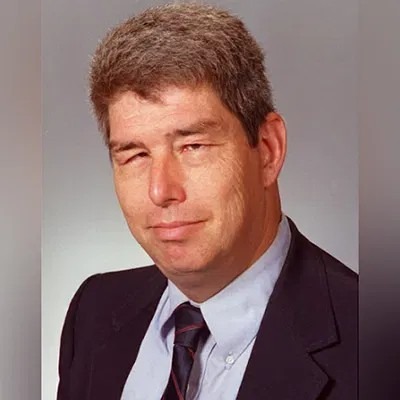
G. Sundar
Director & Senior Consultant, PharmQA Compliance Services

This webinar has ended
Registration is closed because the live date has passed.
Browse upcoming webinarsWhat You'll Learn
About the event
About this event
A nitrosamine risk assessment is often straightforward when the process, materials, suppliers, and product remain unchanged. The truly difficult decisions begin during lifecycle management when something changes. A new supplier is introduced. A reagent is replaced. A manufacturing site is transferred. A formulation is modified. An unexpected analytical result is reported. Teams must determine whether the existing risk assessment remains scientifically defensible or whether a formal reassessment, confirmatory testing, or additional control strategies are required.
This technical webinar focuses entirely on the critical decisions that follow post-approval change. Participants will learn how experienced pharmaceutical organizations evaluate reassessment triggers, determine the significance of supplier, process, formulation, and manufacturing modifications, and decide when physical testing is strictly warranted versus when a scientific rationale suffices. The session will deeply examine the application of ICH M7 purge assessments, the classification of Nitrosamine Drug Substance Related Impurities (NDSRIs) using CPCA principles, the justification of testing strategies, and the development of agile control approaches that remain fully compliant as products, processes, and international regulatory expectations continue to evolve.
WHY YOU SHOULD ATTEND
Few life science organizations still struggle with the initial phase of identifying potential nitrosamine risks. The greater, ongoing operational challenge is determining exactly what to do after a change occurs. The same high-stakes question repeatedly surfaces across Change Control reviews, technical assessments, supplier evaluations, deviation investigations, Annual Product Reviews (APR/PQR), and global regulatory submissions: Does this change require a nitrosamine reassessment?
The answer is rarely obvious or binary. Some lifecycle changes necessitate immediate confirmatory testing, revised specifications, or a comprehensive overhaul of the regulatory dossier. Others require only a highly robust, documented scientific rationale. This webinar demystifies how those decisions are made. Participants will review the exact technical factors used to evaluate change impact, understand when a purge-based justification can bypass laboratory analysis, and assess whether existing control strategies remain resilient. The session also directly addresses the latest NDSRI categorization matrix, specification limit decisions, evolving Acceptable Intake (AI) calculations, and the practical, harmonized application of current USFDA, EMA, Health Canada, ANVISA, and TGA expectations.
Code: FDB3537
Curriculum
Requirements
- Working in pharmaceutical manufacturing, regulatory affairs, quality, or analytical development roles
- Familiarity with basic nitrosamine risk assessment concepts or change control processes is beneficial
- Applicable to senior technical professionals, managers, and directors across global life sciences organizations
Who Should Attend
This technical training is engineered for senior technical professionals, managers, and directors across global life sciences, including: Quality Assurance (QA) Departments, Regulatory Affairs (RA) & Regulatory CMC Departments, Quality Control (QC) & Analytical Development Departments, Process Chemistry & Technical Services Departments, Formulation Development Departments, Manufacturing Operations Departments, and Supplier Quality Departments.
Areas Covered
Meet Your Instructor
G. Sundar
Director & Senior Consultant, PharmQA Compliance Services
G. Sundar (Sundar Ganesan) is a quality practitioner with 35 years of experience in Quality Assurance, Quality Control, Bioequivalence, and Pharmaceutical Regulations. His quality management experience covers the implementation of quality tools in bulk drugs, formulation companies, and CROs. He is an expert in Total Quality Systems as per GLP, GDP and EMEA, USFDA, MHRA, MCC, TGA, ANVISA, and Japan guidelines. He has conducted more than 200 GMP/GLP audits including Q10 & Q11 implementation, audits of 50 Formulation Contract Manufacturing Units, 10 Contract Research and Analytical laboratories, and 10 Clinical Research CROs. He has conducted 1,000+ trainings across Asia, US, EU, Middle East, and South-East Asia. Mr. Sundar Ganesan is the Director and Senior Consultant at PharmQA Compliance Services.
This webinar has ended
Registration is closed because the live date has passed.
Browse upcoming webinarsEvent Details
Format
Live Webinar
Duration
2 hours
Certificate
Included
Date
Tuesday, September 29, 2026
Related Events

Digital Quality Metrics and AI/ML Analytics: Building a Continuous-Improvement Framework that Aligns with Regulatory Expectations
Learn how AI/ML and real-time digital quality metrics build a continuous-improvement framework aligned with FDA regulatory expectations, 21 CFR Part 11, and GAMP®5.
 Carolyn Troiano
AI in GMP: What the FDA Is Already Expecting - Before You Ask
FDA already expects GMP compliance for AI systems. Learn how existing validation, data integrity, and oversight rules apply—before regulators come calling.
 Dr. Ginette Collazo
HPLC Analytical Method Development and Validation
Master HPLC instrument and method validation to meet US EPA and FDA requirements for pharmaceutical analysis.
 Dr. John C. Fetzer